Understanding the Conflict Between Users and Business
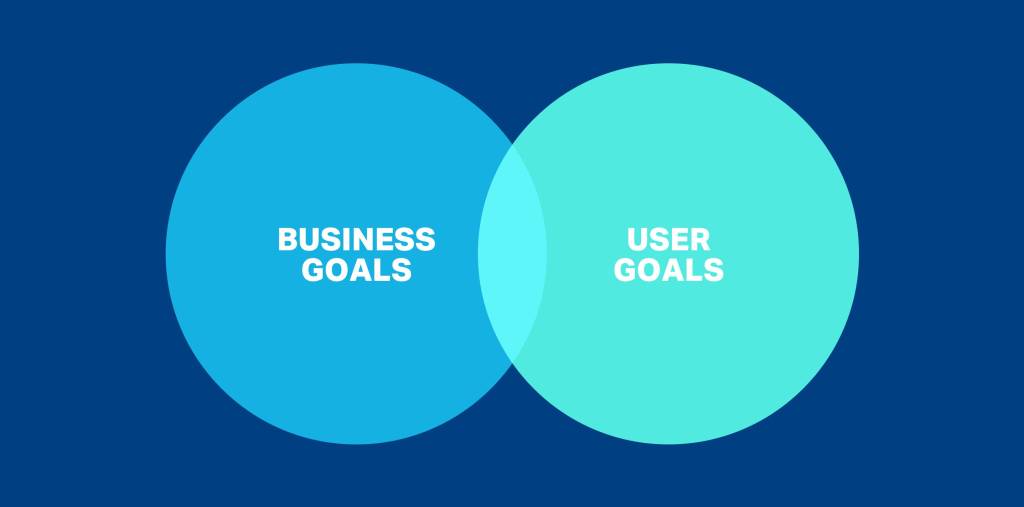
User requirements are what users need to successfully use a product. Business requirements are what an organization needs, such as making money, growing, becoming more efficient, or maintaining a brand.
In User-Centered Design, user and business requirements frequently intersect, but sometimes they conflict.
One of the biggest myths in user-centered design is that it doesn’t consider business needs. The truth is that a successful product balances both. The trick is knowing when business needs are interfering with usability and when user needs must be put first.
Why User-Centered Design Is Important
The user-centered approach views products as being unsuccessful when businesses do not consider how their requirements will affect users. Many businesses implement forced registration for use of products, bombard users with irrelevant ads, or provide confusion with respect to upselling, which may result in more sales in the short term but ultimately frustrate their users.
In my opinion, designers should use user requirements to develop products, and business requirements only to place constraints around how those products can be created; business requirements should not dictate how users will experience a product. When users feel that designers have given them respect regarding good user experience, businesses have a higher probability of achieving their goals organically through user trust and continued use of the product.
Account Restrictions for Streaming Services
Many streaming services restrict the number of users that can access a single account at once. From a company benefit perspective, this prevents users from sharing their accounts and at the same time protects their revenues. However, from the customer experience perspective, these restrictions can feel somewhat random and frustrating.
In addition to being unpredictable, users will stop using the service if they do not understand or are too severely restricted from accessing their account. This shows that when companies make decisions based only on business reasons, it can hurt the user’s experience and needs, such as knowing what to expect, having options available and understanding the company policy relating to these areas.
Case Study
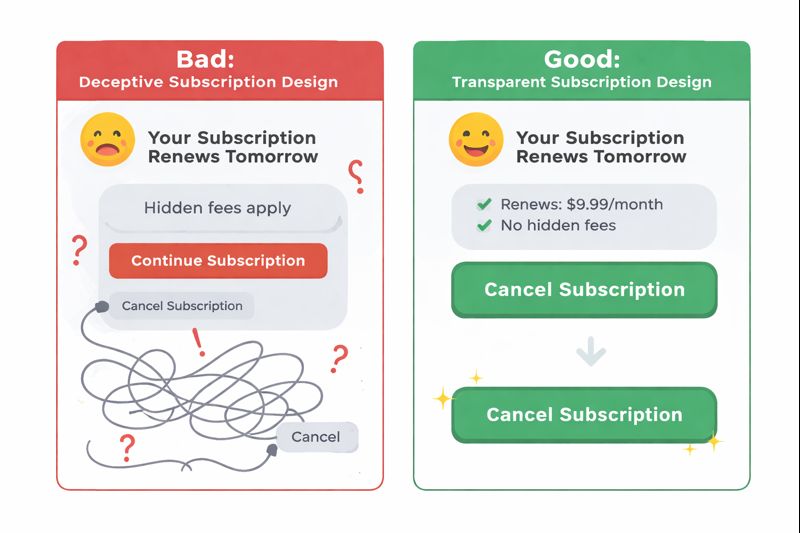
In a case study on subscription design, we see examples of dark patterns used to design subscription products that favour a company’s goals rather than a user’s needs. Examples of these dark patterns are items like hiding the cancellation option and making the unsubscribe process complicated. In the short term, these tactics may reduce churn; however, they create a lack of trust.
User-centred options would be simple things such as providing clear pricing, providing a visible cancellation option, and providing honest messaging to the consumer. Research and actual industry examples demonstrate that using transparent design to the user will often lead to a higher level of long-term retention, proving that user and business objectives do not need to be mutually exclusive.
Finding the Balance
Balancing user needs with business needs can be difficult for UX designers when they are frequently pressured by stakeholders focused on measuring results instead of how usable an experience is. Without someone in a strong advocate role for users, a design could become increasingly non-user centric over time through poor decision-making.
On the other hand, it is also unrealistic to ignore the realities of running a business. The best UX design solutions will provide a way for an organization to meet user expectations while still achieving their business objectives; therefore, satisfying a user’s needs must work together with meeting the goals of a company, not against them.
Conclusion
To wrap up, User-Centered Design is ideally done with equal weight on the user and business needs. When designers only focus on business goals, users often experience frustration and leave them. However, when designers focus only on users and do not take into account business needs (e.g., making a profit), it will most likely not be a sustainable experience.
If designers consider both the business needs and user needs through thoughtful design, the resulting experience will be usable, ethical, and remain that way indefinitely.
 Riley Propersi's Blogs